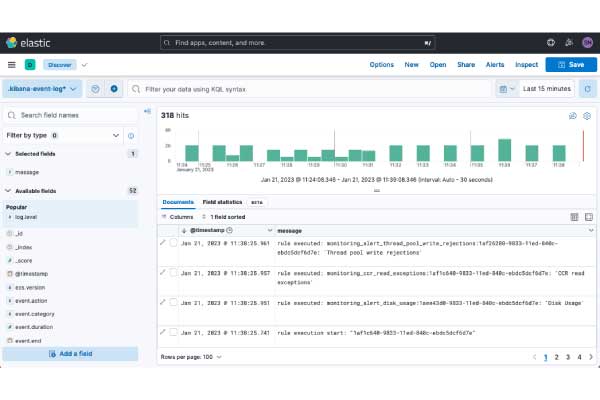
Elastic has released security updates to address two vulnerabilities in Kibana, the visualization and analytics dashboard component of the Elastic Stack. The flaws, tracked as CVE-2025-37734 (CVSS 4.3) and CVE-2025-59840 (CVSS 8.7), could allow Server-Side Request Forgery (SSRF) and Cross-Site Scripting (XSS) attacks respectively. The SSRF flaw stems from an Origin Validation Error in Kibana’s Observability AI Assistant feature, while the XSS vulnerability arises from improper input sanitization in the Vega visualization engine. Elastic confirmed that both Elastic Cloud and self-hosted environments were affected, urging all users to upgrade immediately to versions 8.19.7, 9.1.7, or 9.2.1, which contain the necessary patches. These vulnerabilities pose significant risks to system integrity and data confidentiality. The SSRF flaw could allow attackers to send crafted HTTP requests with spoofed Origin headers, potentially tricking Kibana into accessing or transmitting internal resources. Meanwhile, the Vega-related XSS bug could enable malicious actors to inject and execute arbitrary JavaScript code in a user’s browser, leading to session hijacking or data theft. Since Vega visualizations are enabled by default, most Kibana deployments are exposed unless this feature has been manually disabled. Elastic strongly recommends users to upgrade to the latest patched versions as soon as possible. For those unable to update immediately, temporary mitigations are available. Administrators of self-hosted instances can disable Vega visualizations in the configuration file, while Elastic Cloud users can contact Elastic Support to request the same. Prompt action is critical to prevent potential exploitation of these vulnerabilities.
Security researchers have identified a new ransomware operation known as Payload that is actively targeting Windows and VMware ESXi environments across multiple sectors. The malwar...
Phishing operations are rapidly evolving as cybercriminals adopt encrypted messaging services such as RCS and Apple iMessage instead of relying solely on traditional SMS delivery. ...
Security researchers from GitHub Security Lab have uncovered multiple critical vulnerabilities in 7-Zip that could allow attackers to execute arbitrary code or expose sensitive inf...