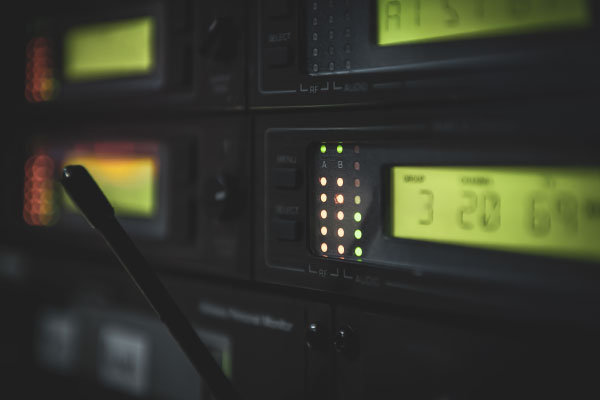
Midnight Blue cybersecurity experts have revealed serious flaws in the TETRA (Terrestrial Trunked Radio) protocol, which is used globally by law enforcement, military, transport, and critical infrastructure. Unveiled during Black Hat USA 2025, the newly identified vulnerabilities 2TETRA:2BURST compromise TETRA’s end-to-end encryption (E2EE), leaving it open to replay attacks, brute-force attempts, and unauthorized message injection. One of the worst vulnerabilities is CVE-2025-52941, which describes an impaired AES-128 algorithm reducing effective key strength to as low as 56 bits, and hence being brute-forceable. Vulnerabilities are particularly dangerous for networks that depend on TETRA for data transmission, where unauthenticated traffic injection becomes a possibility even in encrypted networks. The vulnerabilities include replay attacks on encrypted voice streams (CVE-2025-52940), SDS message replay protection not being there (CVE-2025-52942), and cross-algorithm key recovery threats (CVE-2025-52943), especially where the unsafe TEA1 algorithm is still being supported. Another critical vulnerability, CVE-2025-52944, makes all TETRA networks exposed to message injection regardless of whether encryption is on or off. Midnight Blue also found an incomplete patch for a 2022 vulnerability (CVE-2022-24401), which still allows keystream recovery attacks. No wild exploitation reported, but most of them remain unpatched, with one exception (MBPH-2025-001) where a fix is imminent. Operators are recommended to migrate to secure E2EE, turn off TEA1, key rotate, and use TLS/VPN tunnels for confidential data. Additionally, three physical-access weaknesses impact Sepura SC20 radios, including unauthorized code execution (CVE-2025-52945) and weak SD card encryption (CVE-2025-8458), leading to TETRA key exfiltration (MBPH-2025-003). While patches for a few of these are expected in Q3 2025, the architectural weakness that enables the extraction of keys cannot be rectified. Midnight Blue warns attackers to embed permanent firmware backdoors or to download all the encryption content with minimal device access, breaking the confidentiality and integrity of secure radio communications.
A major surge in email-borne worms targeting industrial control systems (ICS) emerged in Q4 2025, signaling a serious shift in threats to operational technology (OT) environments. ...
A critical security issue affecting Fortinet’s FortiSandbox has gained significant attention following the public release of a proof-of-concept exploit. Identified as CVE-2026-39...
A targeted cyber campaign has been uncovered in which attackers exploit the legitimate Obsidian note-taking application to distribute a stealthy remote access trojan known as PHANT...