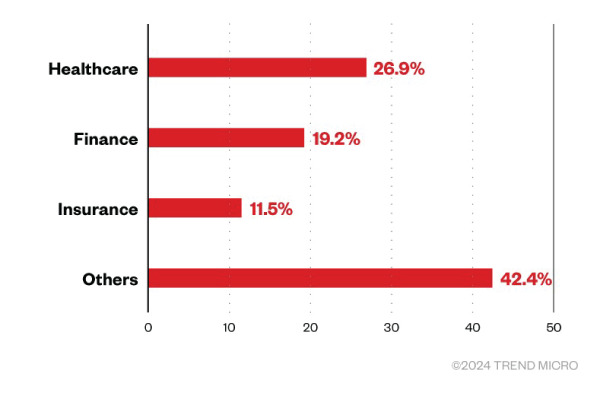
The RA World ransomware, previously known as the RA Group, has been actively targeting organizations worldwide since its emergence in April 2023, with a notable concentration of attacks in the US and sporadic incidents in countries like Germany, India, and Taiwan. The group primarily focuses on the healthcare and financial sectors. Recently, Trend Micro's threat hunting team uncovered an RA World attack aimed at healthcare organizations in Latin America, revealing a sophisticated multi-stage infiltration strategy. The initial breach involves compromising domain controllers and deploying malicious components to the SYSVOL share path for a machine Group Policy Object (GPO). Stage1.exe, executed via PowerShell, manipulates Group Policy settings to facilitate the execution of malicious payloads across the network. The malware meticulously checks domain controllers, ensuring it operates within specific parameters to avoid detection. It also scrutinizes for prior compromises or exclusions on target machines before proceeding. Stage2.exe, introduced subsequently, serves as the ransomware payload delivery mechanism. It checks for safe mode and verifies the absence of certain files before creating a new service and configuring the system for safe mode with networking. After decrypting payload instructions and executing ransomware activities, cleanup routines are initiated, ensuring minimal traces of the malware. The ransom note, typical of RA World's tactics, includes a list of recent victims to pressure others into compliance. Additionally, the deployment of SD.bat aims to disrupt security measures, while the use of WMIC utility gathers disk information, leaving a log for the attackers. Following the attack, the ransomware removes the Safe Mode with Networking option from the system's boot configuration and forces a reboot. This incident underscores the evolving threat landscape, where leaked ransomware source codes empower new threat actors, including RA World operators, to engage in targeted attacks. Healthcare institutions remain particularly vulnerable, as evidenced by the tailored nature of the attack and the inclusion of victim-specific strings within the malware components. Vigilance and robust cybersecurity measures are imperative to mitigate such threats effectively.
Excessive CPU and memory usage in Google Chrome has become a common issue, often caused by malicious or poorly designed browser extensions. Some extensions are built with hidden mo...
Cybersecurity researchers have identified a new variant of the GlassWorm campaign that targets developers through a malicious Open VSX extension named “specstudio.code-wakatime-a...
A recently disclosed flaw in the widely used Android library EngageSDK has created significant concern within the cryptocurrency space, as it may have exposed millions of users to ...